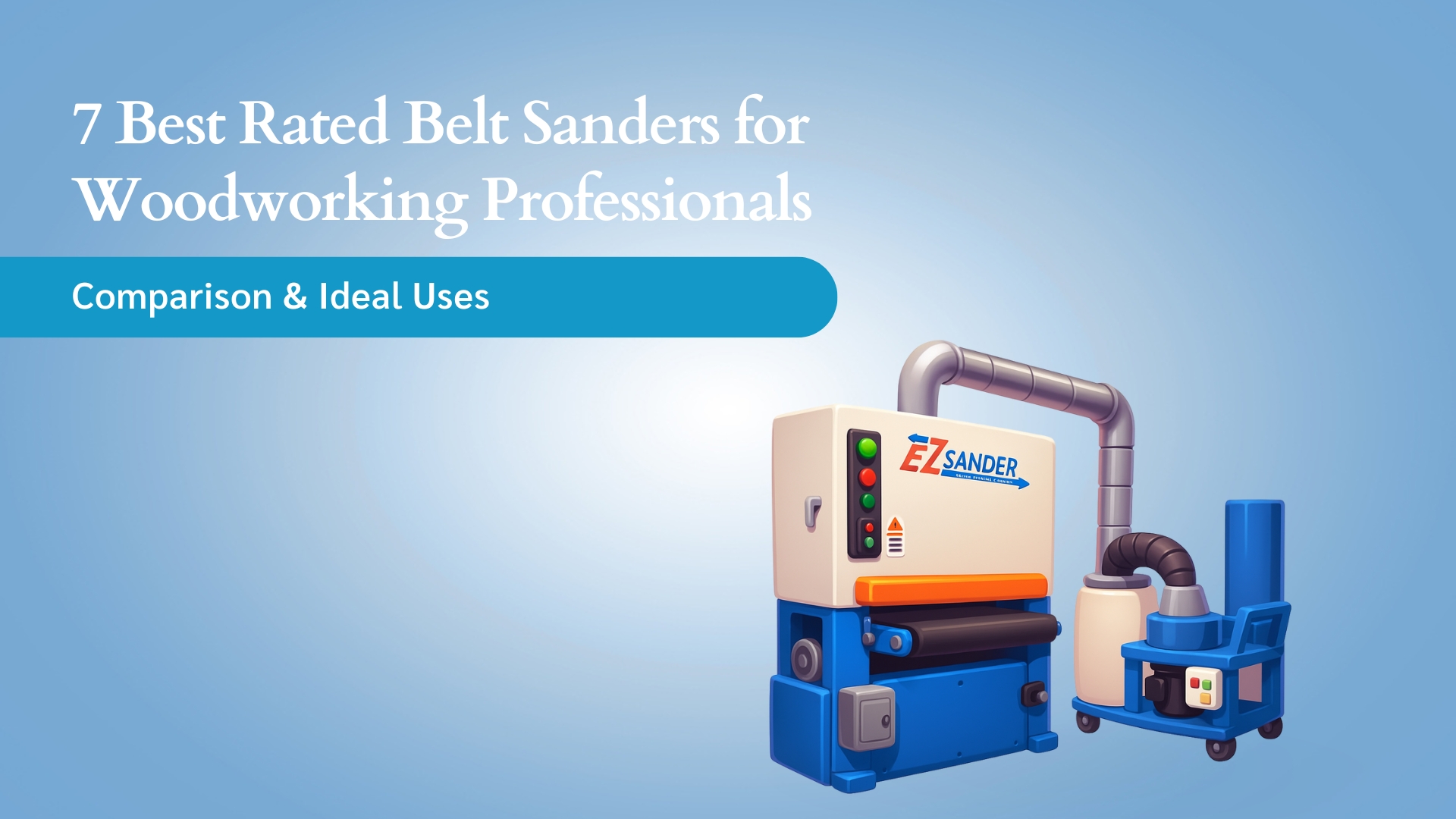
A belt sander has a direct impact on how efficiently you finish surfaces, how smooth your results appear, and how quickly projects move from rough shaping to final prep.
For cabinet makers, furniture creators, home workshops, and professional carpentry teams, choosing the right sander helps maintain steady output and consistent finish quality without pushing your budget.
With several models available, selecting a belt sander that offers professional performance, long-term reliability, and clean operation becomes essential.
This guide compares the best rated belt sanders, their features, pricing, ideal use cases, and what makes each model stand out.
Key Takeaways
The best rated belt sanders help workshops manage daily sanding work with smoother finishes, faster material removal, and predictable operation.
Knowing how belt speed, motor power, belt size, and dust collection affect real-world performance helps you choose the right machine for your workload.
Reliable features like automatic belt tracking, efficient dust extraction, and durable construction reduce rework, protect materials, and keep workflows moving.
Comparing models based on handling, ergonomics, balance, and power makes it easier to match the right sander to your project types and workspace.
Long-lasting sanders with strong motors and stable belts from Cutting Edge Plasma support consistent results and reduce downtime for repairs.
Why Every Woodworker Professional Needs a Top-Rated Belt Sander?
In a woodworking operation, every tool influences speed, finish quality, and project accuracy. A belt sander is more than a surface-prepping tool; its performance affects how quickly edges and surfaces get refined, how much rework is required, and how smooth the final product turns out.
Here’s how the right belt sander impacts daily workloads:
Faster project completion: High belt speed removes material quickly, helping you finish tabletops, doors, frames, and panels on schedule.
Smooth and consistent results: Even sanding reduces swirl marks, uneven surfaces, and rework, and is ideal for cabinetry, furniture, and professional finishing.
Lower operational effort: Automation features like auto-tracking and efficient dust extraction reduce interruptions and keep the workspace cleaner.
Ability to handle bigger jobs: Powerful sanders can tackle hardwood surfaces, large doors, beams, and reclaimed lumber without slowing down.
Stable daily operation: Strong motors, balanced housings, and clean belt tracking ensure repeatable results across multiple woodworking tasks.
And upgrading to a high-rated belt sander ensures efficient workflow and consistent results. Models like the 37" Metal Widebelt EZ Sander from Cutting Edge Plasma are designed for workshops focused on dependable performance and lasting productivity.
A carefully chosen belt sander helps maintain finish quality, reduces rework, and keeps your workshop operating smoothly whether you're handling custom builds or continuous projects.
7 Best Rated Belt Sanders For Woodworking Professionals in 2025–26
Choosing the right belt sander becomes easier when you compare how each model performs in real woodworking conditions. Instead of sorting through long specification lists, the overview below highlights the belt size, power, features, and ideal use cases that matter most.
Belt Sander | Best For | Ideal Use |
Upgrading from manual sanding in small or large shops | Deburring, finishing, and keeping workflow smooth | |
Makita 9903 Variable Speed Belt Sander | Woodworkers needing adjustable speed | Cabinets, furniture, and delicate surfaces |
Metabo HPT SB8V2 Belt Sander | Workshops needing strong performance | Hardwood panels, doors, and large construction pieces |
Skil 7510-01 3" x 18" Belt Sander | Home users and beginners | Light sanding, touch-ups, and small crafts |
Craftsman CMEW213 3" x 21" Belt Sander | DIY and medium-scale projects | Furniture, shelves, and panels |
DeWalt Variable Speed Belt Sander | Professionals handling larger projects | Large panels, cabinetry, and detailed finishes |
Ryobi BE319 Belt Sander | Budget-conscious beginners | Small projects, home crafts, and minor touch-ups |
Below, you’ll find detailed breakdowns of the most dependable options known for their low vibration, stable tracking, efficient dust collection, and reliable motors.
1. 37" Metal Widebelt EZ Sander
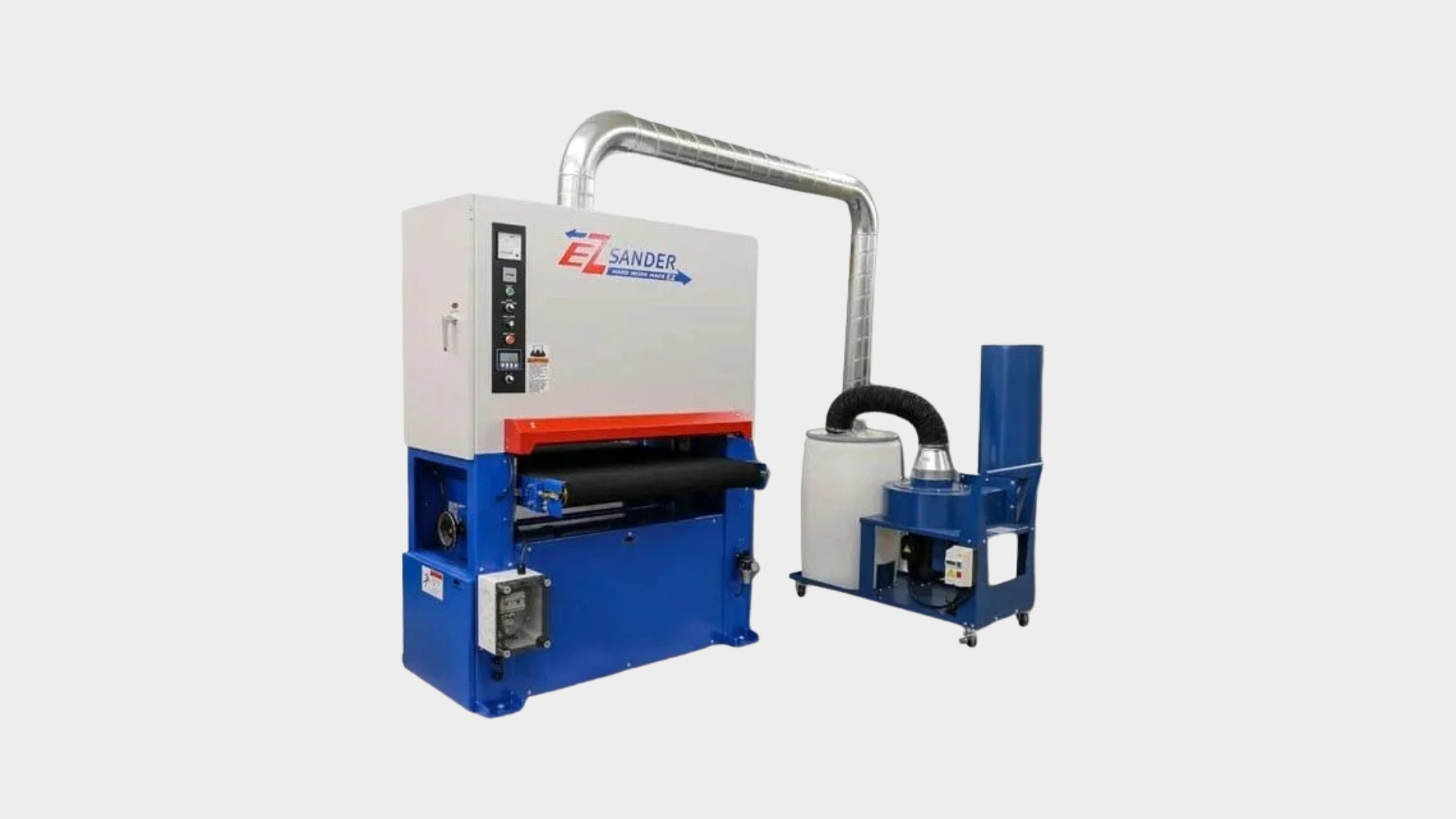
Price: $17,595
Best For: Shops looking to upgrade from manual sanding or deburring to a reliable, time-saving solution. Perfect for small metalworking shops or larger production facilities handling off-line projects where consistent finish and smooth workflow are essential.
Why It Stands Out:
The 37" Metal Widebelt EZ Sander is designed to make metal finishing simpler, faster, and more predictable.
Its compact footprint and portability allow it to fit almost any shop, while still handling tasks like deburring, vertical burr removal, straight grain finishing, and light mill scale removal.
Even smaller teams can maintain professional-quality results without the need for time-consuming hand sanding.
Built for durability and everyday use, this machine keeps production moving smoothly while reducing material waste and operator fatigue.
Safety features protect both the operator and the equipment, letting teams work confidently on multiple jobs. Its intuitive controls make operation easy, and on-site training ensures that your staff can use the machine efficiently from day one.
Perfect For:
Metalworking shops of any size that want to reduce hand labor while maintaining consistent finishes. Whether you’re running small batches, handling intricate parts, or preparing metal components for final assembly, this sander saves time, enhances accuracy, and keeps production flowing reliably.
To ensure optimal performance, Cutting Edge Plasma can guide you through machine setup, operator training, and integrating the EZ Sander into your workflow. We help shops maximize efficiency, minimize downtime, and maintain predictable results every day.
2. Makita 9903 Variable Speed Belt Sander
Best for: Woodworkers needing adjustable speed and accurate finishing
Why It Stands Out:
The Makita 9903 is designed for projects that require a smooth, controlled finish. Its variable speed control allows you to match the sanding pace to the material and project, giving cleaner results with less effort. The stable handling makes longer sanding sessions comfortable and helps maintain accuracy across cabinets, frames, and delicate surfaces.
Ideal Use:
Woodworkers focused on finishing, detailed furniture, and delicate surfaces where control and smooth results are essential for professional-quality work.
3. Metabo HPT SB8V2 Belt Sander
Best for: Workshops needing strong performance with reliable results
Why It Stands Out:
The SB8V2 delivers efficient material removal while keeping your work smooth and predictable. Its comfortable design reduces fatigue during longer jobs, letting you focus on accuracy. Dust management keeps the work area clean, improving both finish quality and workflow.
Ideal Use:
Shops working on hardwood panels, doors, and larger construction pieces where consistent sanding speed and consistency are necessary to maintain high-quality finishes across bigger surfaces.
4. Skil 7510-01 3" x 18" Belt Sander
Best for: Home workshops and basic woodworking
Why It Stands Out:
Lightweight and easy to handle, the Skil 7510-01 is perfect for beginners or casual woodworkers. Its design keeps sanding straightforward, efficient, and clean, so even small projects feel manageable and enjoyable.
Ideal Use:
Hobbyists and small home workshop users who need a compact, easy-to-use sander for light sanding tasks, furniture touch-ups, or small craft projects, making everyday woodworking simple and accessible.
5. Craftsman CMEW213 3" x 21" Belt Sander
Best for: DIY enthusiasts and mid-level surface preparation
Why It Stands Out:
The Craftsman CMEW213 is a practical choice for medium-scale projects. Its thoughtful design makes sanding smooth and consistent while allowing for easy handling. You can work confidently on furniture, shelves, or panels without interruption.
Ideal Use:
DIYers and home improvement enthusiasts tackling medium-sized projects where dependable performance and easy maneuverability ensure quality results without frustration or excessive effort.
6. DeWalt Variable Speed Belt Sander
Best for: Professional carpentry and fine workmanship
Why It Stands Out:
DeWalt’s belt sander is built for professionals who need consistent results day after day. It’s reliable, easy to control, and keeps workflows smooth across larger projects. Adjustable speed settings let you handle different surfaces with care and precision.
Ideal Use:
Professional woodworkers, cabinet makers, and furniture builders who require a sander that delivers accurate repeatable results for large panels or complex finishes, helping maintain workflow efficiency in busy shops.
7. Ryobi BE319 Belt Sander
Best for: Beginners and budget-friendly setups
Why It Stands Out:
Compact and simple to use, the Ryobi BE319 is ideal for small projects and home workshops. Its user-friendly design allows for quick handling and keeps sanding straightforward, even for those just starting out.
Ideal Use:
Beginner woodworkers and casual DIYers who need an affordable, easy-to-handle tool for smaller home projects, crafts, or touch-ups, where simplicity and accessibility are more important than high-volume performance.
How to Choose the Best Belt Sander for Your Workshop?
Selecting the right belt sander can make a big difference in how efficiently your workshop runs and how smooth your finishes turn out. Even the best-rated belt sander works best when it matches your projects and usage.
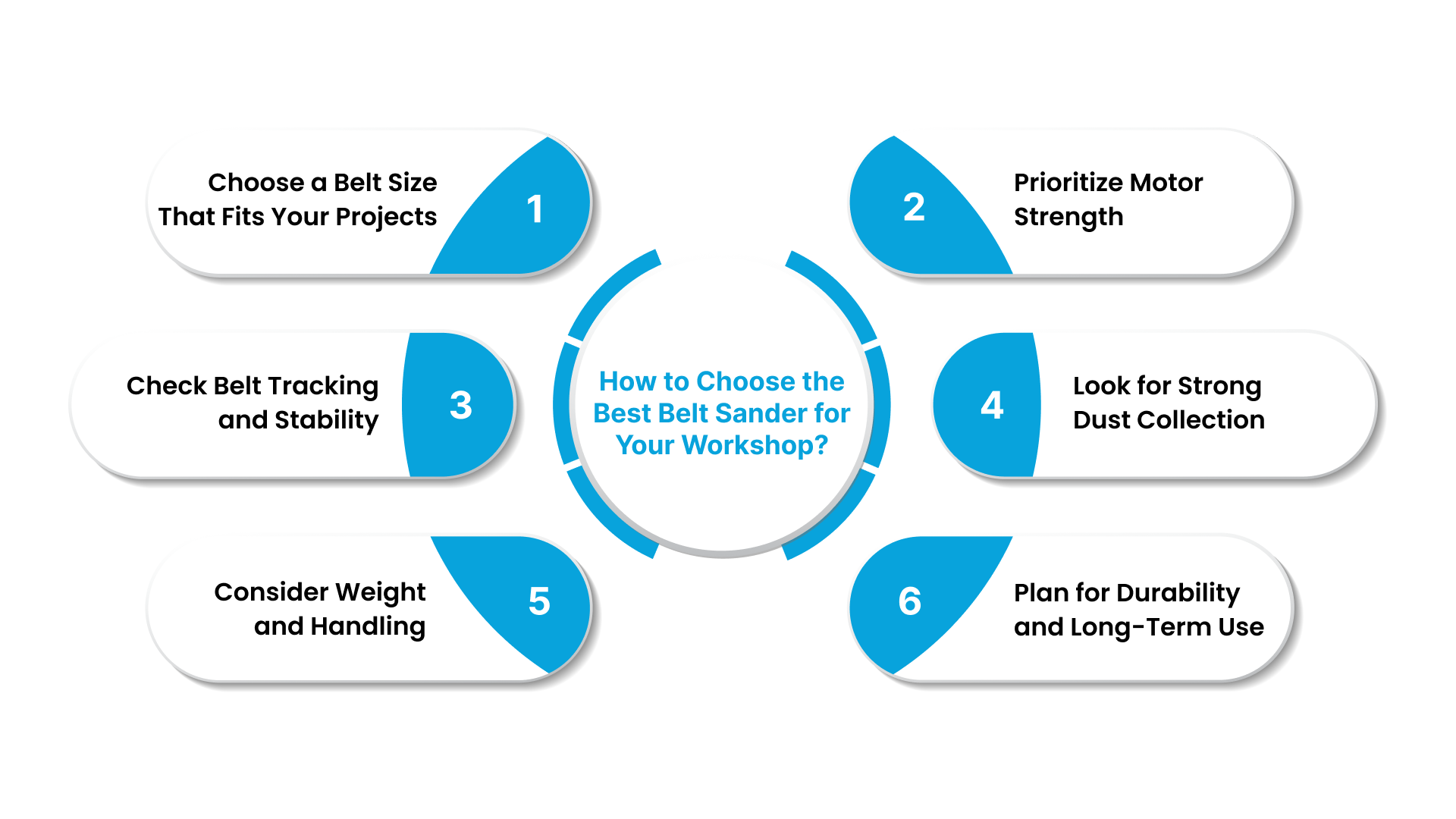
Here’s what to look for:
1. Choose a Belt Size That Fits Your Projects
The size of the belt affects how much material you can remove at a time and how versatile the sander will be. A 3" x 21" belt works well for most general woodworking, smaller boards, and touch-up work.
For heavier stock removal or wider surfaces, a 4" x 24" belt is ideal. Picking the right size ensures you can complete projects faster and with smoother results.
2. Prioritize Motor Strength
The motor determines how efficiently your sander handles different materials. Motors rated 7–8 amps are sufficient for light to medium use, such as small furniture or hobby projects.
If you regularly work with hardwoods or larger panels, a 9–11 amp motor will provide consistent speed and prevent uneven sanding. A strong motor also keeps the belt running smoothly under continuous use, which reduces the risk of burn marks and uneven finishes.
3. Check Belt Tracking and Stability
Proper belt tracking is essential to prevent misalignment and premature wear. Models with auto-tracking features automatically keep the belt centered, which saves time and minimizes mistakes during long sanding sessions. A stable sander prevents wobbling and ensures even pressure across the surface.
4. Look for Strong Dust Collection
Effective dust collection not only keeps your workspace clean but also protects the motor and extends the life of the sander.
It also improves visibility while sanding and ensures a cleaner finish on your workpieces. Less dust means less cleanup at the end of the day and a safer working environment.
5. Consider Weight and Handling
The weight of the sander affects how you use it. Lighter models are easier to maneuver for vertical or angled sanding, while heavier models provide better stability for flat surfaces.
Choose a belt sander such as the Metal Widebelt EZ Sander that fits the types of projects you do most often and won’t cause fatigue during longer tasks.
6. Plan for Durability and Long-Term Use
A durable sander will stand up to frequent use and last for years. Look for heavy-duty housings, strong motors, and sealed bearings designed for professional use.
Investing in a well-built model reduces maintenance, prevents unexpected downtime, and ensures your sander continues to perform reliably as your workshop grows.
Why Woodworkers Trust Cutting Edge Plasma for Belt Sanders?
If your workshop handles custom wood projects, furniture building, or small-scale production, having the right belt sander setup is essential for smooth workflow, perfect finishes, and minimal material waste.
With proper guidance, you can maintain an organized workspace, reduce errors, and keep daily operations running efficiently. Cutting Edge Plasma provides practical advice, step-by-step instructions, and hands-on tips that woodworking teams rely on every day.
Here’s why small shops and professional woodworkers turn to Cutting Edge Plasma:
Space-Efficient Design: Compact belt sanders fit neatly in smaller workshops while still handling a variety of sanding tasks. They let you work on panels, edges, and detailed components efficiently without taking up too much room.
Adjustable Belt Speed and Tracking: Built-in adjustments let you control sanding speed and maintain perfect belt alignment. This reduces uneven finishes, protects your belts and motors, and keeps projects moving smoothly.
Dust Collection for Cleaner Work: Integrated dust ports and thoughtful design help manage debris. This makes daily cleanup easier, protects your tools, and ensures a cleaner workspace for better finish results.
Budget-Friendly Ownership: With durable construction and smart design, these sanders offer reliable performance for small to growing shops without stretching your budget or compromising quality.
Safety Features: Anti-kickback systems and other safety mechanisms prevent accidents during tricky sanding operations, letting operators work confidently and consistently.
Simple, Intuitive Operation: User-friendly controls make setup and daily use easy. Even a single operator managing multiple tasks can keep projects on schedule without delays.
Reliable Support and Warranty: With clear warranty terms and expert guidance from Cutting Edge Plasma, workshops can quickly resolve issues, even without dedicated maintenance staff keeping downtime to a minimum.
Strategic Insight:
The right belt sander setup ensures smooth operation, consistent finishes, and a predictable workflow. These features help woodworking shops reduce rework, maintain steady output, and simplify daily operations. Choosing the best rated belt sanders from Cutting Edge Plasma ensures your workshop runs efficiently, safely, and reliably.
Conclusion
The best rated belt sander keeps your woodworking projects running smoothly, ensures consistent finishes, and reduces rework. Choosing a high-quality sander improves workflow, protects materials, and allows you to focus on fine craftsmanship.
At Cutting Edge Plasma, we help you compare top-rated belt sanders and provide guidance to find a model that balances power, durability, and ease of use.
For expert advice on features, setup, and maintenance, contact Cutting Edge Plasma today, and ensure your workshop invests in a sander that delivers reliable, long-term performance.
FAQs
1. What should I look for in a belt sander for professional woodworking?
A top-rated belt sander delivers consistent sanding performance, reliable power, and smooth handling during long sessions. Prioritize robust motors, adjustable speeds, and durable belts for accurate, efficient results.
2. Handheld vs. benchtop belt sanders: which is better?
Handheld models provide flexibility for large surfaces and quick adjustments, while benchtop sanders offer stability and detailed tasks. Choose based on your project types and workspace setup.
3. Which features matter most for professional use?
Key features include variable speed control, effective dust extraction, ergonomic grips, and quick belt changes. These improve sanding efficiency, reduce fatigue, and help maintain a clean workspace.
4. Does the sanding belt size make a difference?
Yes. Wider belts cover more area quickly, suitable for large boards or rough material removal, while narrower belts give better control for detailed edges and smaller projects. Selecting the right belt size optimizes workflow.
5. Are expensive belt sanders always better?
Not always. Focus on durability, motor power, and essential features that match your woodworking needs. A well-chosen sander can deliver professional results without unnecessary cost.